Monday morning, October 16
The Monday Grievance
Thirteen-year-old [Hadley Fox](entity:character-recall-character-hadley-fox-ed71737366ff) begins the week convinced that Mondays are uniquely miserable. She describes herself as an anxious, academically driven girl who feels overshadowed by her beautiful, accomplished older sister, [Tatum Fox](entity:character-recall-character-tatum-fox-dfb1cfad7448), and measures her own worth against Tatum’s effortless popularity.
On the drive to [Burroughs Junior High](entity:location-recall-location-burroughs-junior-hig-049372c0627d), Hadley enjoys a rare private closeness with Tatum. Their affectionate routine briefly makes Hadley feel seen, but the contrast between her sister’s apparent ease and her own insecurity remains central to how she understands the world.
Monday morning, October 16
The Forgotten Presentation
At school, Hadley realizes that she has forgotten her oral presentation on To Kill a Mockingbird. Her new [Super Student Planner Plus](entity:object-recall-object-super-student-planner-a7aeb2b33533) contains no reminder, and the assignment counts heavily toward her grade. For a student who treats academic success as the foundation of her future, the omission feels catastrophic.
Her panic grows as she imagines losing her chance at [Stanford University](entity:location-recall-location-stanford-university-9e4fa2e2eedb) and sees the mistake as proof that she has failed at the one thing she believes she can control. The crisis exposes how thoroughly perfectionism has narrowed her sense of what matters.
Before first period on October 16
The Principal’s Chai Mishap
As Hadley looks for help, [Ms. Pitt](entity:character-recall-character-ms-pitt-e17bae5e7e6d) rushes through the school and collides with [Ed Wells](entity:character-recall-character-ed-wells-44f96d6df21b), spilling her coffee across his shirt. The mishap adds to the principal’s evident skepticism as Ms. Pitt prepares for an interview to chair the English department.
Hadley watches with private satisfaction, distracted for a moment from her own emergency. She sees Ms. Pitt as self-absorbed and out of touch, while the encounter hints at the strained professional relationship that will become important later.
Before first period on October 16
Friends Face the Panic
[Soup](entity:character-recall-character-soup-85fd870e1cd3) and [Nan](entity:character-recall-character-nan-8b3a0b065eb0) find Hadley in a state of near panic. They try to reassure her and suggest she improvise, but Hadley snaps at Soup’s advice, insisting that she cannot simply invent a successful presentation without preparation.
Soup and Nan leave after Soup tells her that she always becomes difficult when events do not go as planned. Hadley immediately regrets the outburst, adding damaged friendships to the growing weight of the morning.
Before first period on October 16
Milly’s Invitation
Hadley meets [Milly Albright](entity:character-recall-character-milly-albright-b43e4b88703d), who notices that she looks upset and invites her to the [You Rock! Self Matters!](entity:organization-recall-organization-you-rock-self-ma-8a28a8cc36bb) group. Hadley declines, judging the group and its small circle of students as embarrassing rather than recognizing the sincerity behind Milly’s offer.
The encounter establishes Hadley’s reflexive contempt for activities that do not fit her own priorities. It also foreshadows the unexpected empathy she will later find in the very group she dismisses.
Before English class on October 16
The Tatum Comparison
Hadley reflects on how disappointing junior high has been compared with her glamorous childhood image of Tatum’s school years. She longs to attract attention and imagines that [Zane Henderson](entity:character-recall-character-zane-henderson-3a7fd2691852) might notice her if she had her sister’s looks and confidence.
When [Zane](entity:character-recall-character-zane-af5d650cbcda) approaches, Hadley briefly hopes that he is interested in her. Instead, he asks about Tatum and her tennis match, confirming Hadley’s fear that her sister draws attention even through her. The exchange leaves Hadley embarrassed and more convinced that she is secondary in her own life.
At the start of English class on October 16
The Monday Dance Announcement
Hadley tries to tell [Ms. Pitt](entity:character-recall-character-ms-pitt-e17bae5e7e6d) that she is unprepared, but Ms. Pitt brushes her off and begins class. The school announcements then reveal that the [Student Council](entity:organization-recall-organization-student-council-f288349c8bbd) has organized an unprecedented Monday-night dance, a surprise intended to give students a reason to welcome a day they usually dread.
Hadley’s attention shifts between her academic crisis and the possibility that [Zane](entity:character-recall-character-zane-af5d650cbcda) might be at the dance. The event gives the day a second emotional thread: the chance of romance, which Hadley cannot quite stop hoping for even as disaster approaches.
First period on October 16
Zane’s Literary Presentation
[Zane](entity:character-recall-character-zane-af5d650cbcda) presents on Truman Capote and the connection between In Cold Blood and Harper Lee’s To Kill a Mockingbird. His initially hesitant talk gains confidence as he explains how Capote’s work blended reporting and literary technique, and how Harper Lee may have helped him gain access to the people he interviewed.
Hadley listens, still attracted to Zane, while the presentation sharpens her dread about having to speak next. [Ms. Pitt](entity:character-recall-character-ms-pitt-e17bae5e7e6d) praises Zane and calls Hadley to the front, leaving her with no more time to escape the assignment.
First period on October 16
Hadley’s Failed Presentation
Standing before the class without notes, Hadley can barely assemble sentences about the book. When [Ms. Pitt](entity:character-recall-character-ms-pitt-e17bae5e7e6d) prompts her about race and justice, Hadley reaches for O. J. Simpson but cannot explain the connection, and her panic leaves her unable to continue.
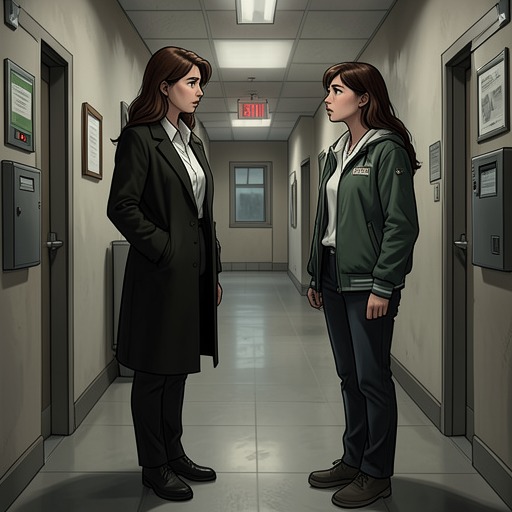
Ms. Pitt takes her into the hallway. Hadley’s failure is more than a bad grade in her mind: it threatens the perfect academic identity she has built to compensate for feeling inferior to Tatum.
Immediately after the failed presentation on October 16
The Sisterly Outburst
When [Ms. Pitt](entity:character-recall-character-ms-pitt-e17bae5e7e6d) mentions that Tatum once arrived unprepared, Hadley explodes. She demands to know why everyone compares her with her sister and accuses Ms. Pitt of undermining self-esteem by invoking Tatum’s success.
Ms. Pitt tries to describe Hadley’s distorted self-image, but her therapeutic language only irritates Hadley further. Their exchange exposes the distance between Ms. Pitt’s well-meant approach and Hadley’s conviction that adults do not truly understand her.
Still during first period on October 16
The Atticus Passage
[Ms. Pitt](entity:character-recall-character-ms-pitt-e17bae5e7e6d) asks Hadley to try a broader presentation and gives her a copy of To Kill a Mockingbird. The book opens to Atticus’s advice that one cannot understand another person without considering life from that person’s point of view and walking around in that person’s skin.
A boy in the class interrupts with a crude comment about Tatum. Hadley loses her place, but she and Ms. Pitt finish the quotation together. The words become the immediate hinge of the story: as they speak, the classroom’s lights flicker and the clock appears to move backward.
Immediately after the Atticus quotation on October 16
The Body Swap
Hadley realizes that she is looking at herself from outside her own body. She has taken on [Ms. Pitt](entity:character-recall-character-ms-pitt-e17bae5e7e6d)’s appearance and voice, while Ms. Pitt is standing in Hadley’s teenage body. Both are bewildered, and neither can explain the inexplicable exchange.
They try repeating the quotation, hoping it will reverse the change, but nothing happens. When they return to class, Hadley takes advantage of her apparent authority and pairs herself with [Zane](entity:character-recall-character-zane-af5d650cbcda), revealing that even in the middle of a supernatural crisis she is still preoccupied with him.
Late in first period on October 16
The Secret Admirer Candy-Gram
During Candy-Gram deliveries, Hadley, in [Ms. Pitt](entity:character-recall-character-ms-pitt-e17bae5e7e6d)’s body, discovers that the teacher has received a message from [Mr. Hudson](entity:character-recall-character-mr-hudson-0d575441cdf1). Then Kaya delivers a separate Candy-Gram addressed to Hadley from a secret admirer, and Hadley is thrilled despite the surreal circumstances.
Hadley’s visible excitement confuses the class and attracts [Ed Wells](entity:character-recall-character-ed-wells-44f96d6df21b)’s suspicion. The message becomes a source of romantic hope, while the body swap makes it impossible for Hadley to know who sent it or to respond as herself.
After first period on October 16
Zane’s Dance Invitation
After the bell, [Zane](entity:character-recall-character-zane-af5d650cbcda) approaches Hadley in [Ms. Pitt](entity:character-recall-character-ms-pitt-e17bae5e7e6d)’s body and asks whether she will attend the dance. Hadley interprets the invitation as a possible sign of interest, while the real Hadley, now in Ms. Pitt’s body, recognizes that she has long suspected Zane likes her.
Hadley’s friends notice the odd behavior of both girls and cannot make sense of their explanations. The exchange intensifies Hadley’s hope, even as the body swap threatens to put her romantic life in the wrong hands.
Around lunchtime on October 16
The Teachers’ Lounge Revelation
Hadley, still in [Ms. Pitt](entity:character-recall-character-ms-pitt-e17bae5e7e6d)’s body, visits the teachers’ lounge and encounters the unglamorous reality of teachers’ daily lives: daytime television, rushed lunches, and papers to grade. Ms. Kenkel explains how long grading takes and how little teachers are paid, forcing Hadley to glimpse the labor behind the classroom.
When Hadley asks about Tatum, Ms. Kenkel describes her as an extraordinary student and recalls how much the school misses her. The praise stings, reinforcing Hadley’s sense that Tatum is universally admired and she herself is unseen.
Early afternoon on October 16
The Self-Esteem Circle
Hadley joins the [You Rock! Self Matters!](entity:organization-recall-organization-you-rock-self-ma-8a28a8cc36bb) meeting in [Ms. Pitt](entity:character-recall-character-ms-pitt-e17bae5e7e6d)’s place. Milly uses a balloon to demonstrate how criticism can drain a teenager’s self-esteem, then describes the humiliation of her brother denying that she was his sister in front of other people.
Hadley recognizes her own pain in Milly’s story and responds with unguarded compassion. She shares an embarrassing imagined account of her own humiliation, and the two girls embrace. For the first time, Hadley experiences the value of being emotionally present rather than simply judging the group from outside.
Early afternoon on October 16
Wells Sends Ms. Pitt Home
[Ed Wells](entity:character-recall-character-ed-wells-44f96d6df21b) summons Hadley, still inhabiting [Ms. Pitt](entity:character-recall-character-ms-pitt-e17bae5e7e6d)’s body, after observing her unusual behavior. Hadley’s exasperation with his authority gives way to a startling outburst about student workloads, impossible college expectations, and the pressure to be exceptional at everything.
Wells decides that Ms. Pitt should go home and rest, and suggests rescheduling her interview. [Mr. Hudson](entity:character-recall-character-mr-hudson-0d575441cdf1) offers to drive her, showing concern for Ms. Pitt even as Hadley struggles to impersonate her and understand the adult relationships around her.
Early afternoon on October 16
Tatum’s Rejection
Outside the school, Tatum suddenly arrives in tears. She has learned that [Colorado State University](entity:location-recall-location-colorado-state-unive-f6f5d1a6b448) rejected her application, despite having seemed like a safe choice, and she fears that her academic record has left her without a future. She also admits that she and Brad are struggling.
Tatum calls herself an idiot and compares herself unfavorably with Hadley, whose studying she now sees as a strength. Hadley is shocked to discover that the sister she thought had a perfect life is frightened and insecure too; Tatum’s distress also makes her unsafe to drive.
Shortly after Tatum drives away on October 16
The Search for Tatum
Hadley tells [Ms. Pitt](entity:character-recall-character-ms-pitt-e17bae5e7e6d) that Tatum is in trouble, and they agree to help her. Hadley takes Ms. Pitt’s keys and drives the Prius, delighted to experience the freedom of driving, but Ms. Pitt points out that Hadley has no license and makes [Mr. Hudson](entity:character-recall-character-mr-hudson-0d575441cdf1) take the wheel.
The three head to the Fox home, then to the high school tennis courts to look for Tatum or Brad. The errand pulls the women into a shared purpose: although they still have no solution to the swap, they can act together to protect Tatum.
Mid-afternoon on October 16
Hadley’s Room and the Search
At the Fox home, [Ms. Pitt](entity:character-recall-character-ms-pitt-e17bae5e7e6d) explores Hadley’s carefully organized room and discovers how completely schoolwork dominates her life. Hadley teases her about failing to recognize the bands on the walls, exposing the gap between Ms. Pitt’s belief that she understands young people and the actual details of teenage culture.
Hadley and Ms. Pitt search online for a way to reverse the swap, finding only occult and fictional explanations. Their laughter at the absurd results offers a rare release and begins to turn their forced partnership into genuine companionship.
Mid-afternoon on October 16
Brad’s Concern
At the high school, Hadley and [Ms. Pitt](entity:character-recall-character-ms-pitt-e17bae5e7e6d) find Brad practicing tennis. Brad recognizes Hadley, worries when he hears that Tatum has been upset, and agrees to pass along a message if he hears from her.
Hadley watches Brad’s warmth toward Tatum and remains aware of how easily others admire her sister. Yet the encounter also confirms that Tatum’s crisis has reached beyond the family, and that people who care about her can help keep her safe.
Late afternoon on October 16
The Interview Becomes Unavoidable
[Mr. Hudson](entity:character-recall-character-mr-hudson-0d575441cdf1) insists that [Ms. Pitt](entity:character-recall-character-ms-pitt-e17bae5e7e6d) must attend her English department chair interview, despite Hadley’s conviction that the day has gone too badly. Hadley and Ms. Pitt agree that they should ask to reschedule, hoping to protect Ms. Pitt’s opportunity until they can return to their own bodies.
On the drive to the school board meeting, Ms. Pitt explains that a former teacher, [Miss Mulligan](entity:character-recall-character-miss-mulligan-eba75167dd80), once made her feel visible and valued. She became a teacher in the hope of offering that same experience to students, and the revelation helps Hadley understand the purpose behind Ms. Pitt’s intense devotion.
During the drive to the interview on October 16
The Hidden Tutoring
[Ms. Pitt](entity:character-recall-character-ms-pitt-e17bae5e7e6d) explains that she arranged tutoring for Tatum, whose reading comprehension had once needed support. Hadley is surprised to learn that her apparently effortless sister had needed help, and that Ms. Pitt had quietly tried to serve as a [Miss Mulligan](entity:character-recall-character-miss-mulligan-eba75167dd80) for her.
The disclosure complicates Hadley’s image of Tatum as naturally perfect and reveals a deeper history between Tatum and her former teacher. It also helps Hadley see that Ms. Pitt’s care is not merely performative; it has shaped real relationships beyond the classroom.
Late afternoon on October 16
Hadley Takes the Interview
At the school board meeting, [Ed Wells](entity:character-recall-character-ed-wells-44f96d6df21b) refuses to reschedule the interview, leaving Hadley to speak for [Ms. Pitt](entity:character-recall-character-ms-pitt-e17bae5e7e6d) in her current body. Hadley begins awkwardly, leaping when someone uses the phrase “jump right in,” then tries to explain Ms. Pitt’s devotion to students and her many extracurricular commitments.
When Wells challenges Ms. Pitt’s reservations about standardized tests, Hadley recognizes the real conflict: literature cannot be fully measured by a single score. She defends the value of interpretation and argues that academic accountability does not capture the full meaning of reading.
During the school board interview on October 16
Tatum’s Distress Signal
In the middle of the interview, Hadley receives a text from Tatum saying that she needs help and is scaring herself. Hadley immediately leaves the room, telling the board that a student in trouble matters more than continuing the interview.
The decision seems to jeopardize [Ms. Pitt](entity:character-recall-character-ms-pitt-e17bae5e7e6d)’s chance at the position, but it also embodies the very devotion Hadley has been defending. She and Ms. Pitt hurry toward the junior high track, uncertain what Tatum’s message means but unwilling to leave her alone.
Late afternoon on October 16
Tatum Finds Perspective
Hadley finds Tatum running alone around the junior high track and lets [Ms. Pitt](entity:character-recall-character-ms-pitt-e17bae5e7e6d) approach her, while she listens from beneath the bleachers. Tatum admits that she applied to many colleges and has been rejected by all of them, leaving her ashamed and convinced that her life is over.
Speaking with unexpected steadiness, Ms. Pitt tells Tatum that not getting what she wants may teach her what she needs. She points out that community college can be a path to a four-year school and that a person’s character matters more than popularity, a boyfriend, or the prestige of a college. Tatum begins to recover her hope.
After the track conversation on October 16
A Changed View of Hadley
Hadley realizes that Tatum’s life is not the effortless success she had imagined. She also sees herself in a mirror-like glimpse while trapped in [Ms. Pitt](entity:character-recall-character-ms-pitt-e17bae5e7e6d)’s body and recognizes that her own appearance is not as disastrous as she had believed.
Ms. Pitt challenges Hadley’s worship of perfect grades, warning that perfectionism is a slow death. Hadley turns the insight back on Ms. Pitt, observing that the teacher also tries to be perfect by taking on too much and seeking universal approval. Their exchange establishes that both need a more balanced life.
Early evening on October 16
Hadley Reads the File
At [Ms. Pitt](entity:character-recall-character-ms-pitt-e17bae5e7e6d)’s home, Hadley studies the teacher’s life beyond school and discovers photographs of her childhood and of [Miss Mulligan](entity:character-recall-character-miss-mulligan-eba75167dd80). The pictures make Ms. Pitt’s story of having once felt invisible more immediate, and Hadley recognizes how profoundly the teacher’s past shaped her purpose.
Hadley then finds her own Student of the Year file. Ms. Pitt praises her intelligence and work ethic but concludes that she cannot recommend Hadley because she knows too little about her as a person and sees her life as unbalanced. Hadley breaks down, wounded by the judgment and unable to dismiss its truth.
Early evening on October 16
The Rewritten Recommendation
Hadley answers [Ms. Pitt](entity:character-recall-character-ms-pitt-e17bae5e7e6d)’s repeated calls and confronts her about the file. Ms. Pitt explains that the assessment reflected what she knew before the day began, but Hadley’s concern for Tatum and her conduct through the body swap have revealed a fuller person.
Ms. Pitt says she may rewrite the final paragraph, giving Hadley a chance to believe that her character is more than grades. The conversation lifts some of Hadley’s despair and turns the day’s strange ordeal into evidence that she can grow beyond academic achievement.
Evening on October 16
The Dance Preparations
[Ms. Pitt](entity:character-recall-character-ms-pitt-e17bae5e7e6d) tells Hadley to attend the dance, arguing that they may have a better chance of reversing the swap if they are together. Tatum has styled Hadley’s hair and makeup, and Ms. Pitt reports that Hadley looks striking; the compliment gives Hadley fresh confidence about seeing [Zane](entity:character-recall-character-zane-af5d650cbcda).
In Ms. Pitt’s closet, Hadley finds heels and a flattering wrap dress, then carefully styles the teacher’s hair in return. She rides a bicycle to the school, enjoying a small taste of freedom even as she remains trapped in an adult body.
Night of Monday, October 16
Hadley Reaches the Dance
The cafeteria has been transformed with twinkling lights for the [I-Hate-Mondays Dance](entity:event-recall-event-i-hate-mondays-1725392cd25e). [Soup](entity:character-recall-character-soup-85fd870e1cd3) and [Nan](entity:character-recall-character-nan-8b3a0b065eb0) urgently ask [Ms. Pitt](entity:character-recall-character-ms-pitt-e17bae5e7e6d) whether she has seen Hadley, unaware that the woman standing before them is their friend.
They compliment Ms. Pitt’s appearance, and Soup says that Hadley would remain wonderful even if she earned nothing but C’s. Hearing a friend defend her worth apart from achievement moves Hadley deeply and prepares her for the romantic revelation to come.
During the dance on October 16
Zane’s True Interest
Hadley, in [Ms. Pitt](entity:character-recall-character-ms-pitt-e17bae5e7e6d)’s body, speaks with [Zane](entity:character-recall-character-zane-af5d650cbcda) and learns that he has never been interested in Tatum romantically. He says he likes Hadley’s looks and intelligence, and Hadley is overwhelmed to discover that the boy she admires has noticed her for herself.
Zane moves toward Hadley in her own body, while the real Hadley is still trapped in Ms. Pitt’s. Hadley watches from nearby, eager to protect the moment but painfully aware that she cannot experience it as herself.
During the first slow dance on October 16
The Almost-Kiss
As Plain White T’s “Hey There Delilah” plays, [Zane](entity:character-recall-character-zane-af5d650cbcda) asks Hadley to dance. [Ms. Pitt](entity:character-recall-character-ms-pitt-e17bae5e7e6d), occupying Hadley’s body, tries to behave like a teenager but speaks with formal awkwardness; Hadley watches from a distance and discreetly nudges her to keep the conversation alive.
Zane admits that he sent the [Secret Admirer Candy-Gram](entity:object-recall-object-candy-gram-637885ac69dd) and confesses that he has always had a thing for Hadley. Ms. Pitt responds sincerely, but when Zane leans in to kiss her, Hadley intervenes just in time, turning Hadley’s face so that his lips miss her cheek.
During the dance on October 16
Randy’s Invitation
While Hadley tracks [Zane](entity:character-recall-character-zane-af5d650cbcda) and [Ms. Pitt](entity:character-recall-character-ms-pitt-e17bae5e7e6d) across the dance floor, [Randy Hudson](entity:character-recall-character-randy-hudson-56d450ceeb71) tells Ms. Pitt that she looks lovely. Hadley is distracted by the near-kiss and initially gives his confession little attention.
When Randy admits that he has long cared for Ms. Pitt, Hadley manages to respond kindly and accepts his invitation to go out. The moment brings a possible romance into Ms. Pitt’s life and makes clear that the teacher, too, has desires that Hadley’s assumptions had overlooked.
Later during the dance on October 16
The Chairmanship Award
[Ed Wells](entity:character-recall-character-ed-wells-44f96d6df21b) approaches [Ms. Pitt](entity:character-recall-character-ms-pitt-e17bae5e7e6d) after Hadley and the teacher are able to speak privately. He explains that the school board saw Hadley’s departure from the interview not as irresponsibility but as proof of Ms. Pitt’s devotion to students.
Despite the disorder of the day, the board offers Ms. Pitt the position of chair of the English department. Hadley and Ms. Pitt celebrate together, and the success vindicates the teacher’s commitment as well as Hadley’s decision to put Tatum’s safety first.
Near the end of the dance on October 16
The Shared Lesson
Hadley and [Ms. Pitt](entity:character-recall-character-ms-pitt-e17bae5e7e6d) acknowledge that both have been living out of balance: Hadley has made study and perfection her whole life, while Ms. Pitt has overloaded herself with school commitments. Each urges the other to leave room for friendship, pleasure, and the less measurable parts of life.
They return to the Atticus quotation about understanding another person by considering that person’s point of view. What began as a classroom line now carries the force of their shared experience: the body swap has made each of them live inside the other’s pressures and assumptions.
Near the end of the dance on October 16
The Return to Their Bodies
As Hadley and [Ms. Pitt](entity:character-recall-character-ms-pitt-e17bae5e7e6d) repeat the quotation together, the cafeteria lights crash and spark, plunging the dance into darkness. When the lights return, Hadley hears her own voice and realizes that she is back in her own body; Ms. Pitt confirms that she has returned to hers.
Relief overwhelms them, and they embrace and laugh at the end of the impossible day. Their restored bodies make the change in their understanding tangible: each has gained a more compassionate view of the other and of herself.
At the end of the dance on October 16
The Final Slow Dance
Randy joins [Ms. Pitt](entity:character-recall-character-ms-pitt-e17bae5e7e6d), while [Zane](entity:character-recall-character-zane-af5d650cbcda) approaches Hadley and responds warmly when she calls herself fabulous. Hadley tells him that she used to hate Mondays, and he says this one has been the best he has had in a while.
As [Savage Garden](entity:organization-recall-organization-savage-garden-8a2cc3969d5b)’s [“Truly Madly Deeply”](entity:expression-recall-expression-truly-madly-deeply-4bba773f2723) begins, Zane asks Hadley to dance and reminds her that their earlier kiss was interrupted. Hadley agrees, while Ms. Pitt accepts Randy’s invitation to dance. Hadley ends the story more willing to inhabit her own life, no longer treating herself as a lesser version of Tatum.